

A lot of Brevard County homes are bought by people who are not here.
Retirees relocating from the Midwest. Families moving for a job at the Cape. Buyers picking up a second home on the beachside they plan to use part of the year. The holiday season is when many of them come down, look at houses over a long weekend, make an offer, and fly home — leaving the rest of the transaction to happen from a thousand miles away.
If that is you, the home inspection is not a formality. It is the closest thing you will have to standing in the attic yourself. Here is how to make it count.
Why Does An Out-Of-State Buyer Rely On The Inspection More Than A Local Buyer?
Because you may only see the house once, and you probably saw it at its best.
A local buyer can drive by after a storm, stop in with a contractor, or walk the property a second time before closing. An out-of-state buyer usually cannot. You saw the home on a showing — staged, cleaned, the AC running, the lights on — and everything you learn after that comes through other people.
A full home inspection covers the roof covering, attic and insulation, structure, the AC and heating system, plumbing, the electrical service and panel, the exterior envelope, drainage and grading, and the visible interior. It is the one part of the process where a professional spends hours looking at the house for your benefit, and puts what they find in writing with photos.
What Do Florida Homes Hide That Buyers From Other States Do Not Expect?
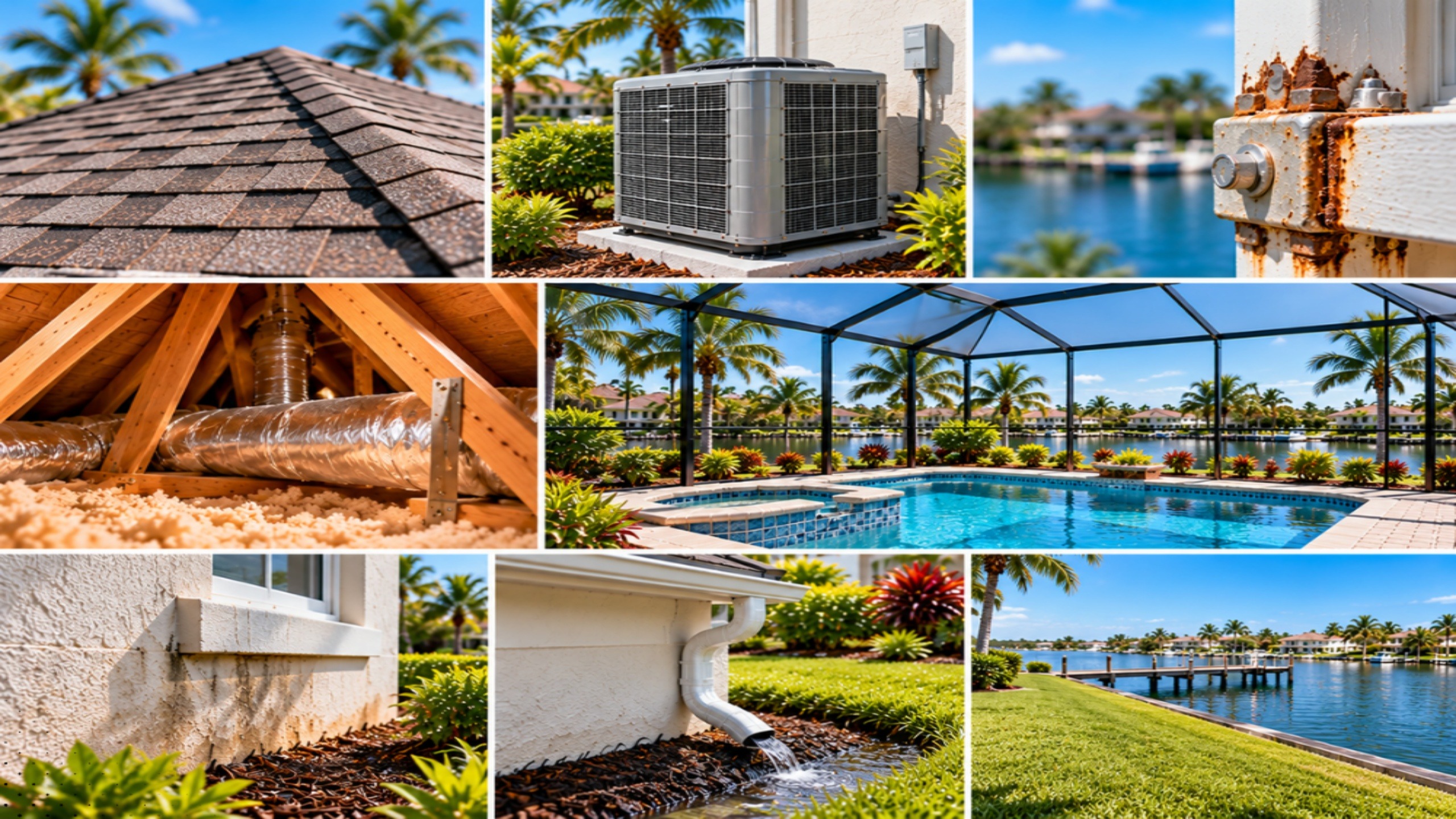
Mostly things caused by sun, salt, water and heat — which look different from the problems buyers know back home.
- The roof matters for more than leaks. In Florida, roof age and condition feed directly into whether a home can be insured and at what price. Buyers from other states are often surprised by how much weight the roof carries in a deal here.
- Corrosion near the coast. On the barrier island and along the river, salt air works on structural fasteners in the attic, the AC condenser, the meter can and outdoor electrical equipment, and railing and garage door hardware.
- The AC is the most important system in the house. Condenser age, the air handler, condensate drainage and duct work in a hot attic all deserve close attention. An AC that is near the end of its life is a budgeting item, not a detail.
- Water where you would not look for it. Staining below windows on the windward side, cracking and old patchwork in stucco, and irrigation that has been spraying the wall for years.
- Screen enclosures and pools. Anchors, fasteners, torn panels, and the condition of the pool equipment and its electrical bonding are common findings, and they are easy for a first-time Florida buyer to overlook.
- Slab foundations. Most Brevard homes sit on a slab rather than over a basement or crawlspace, so the clues are at the edges — grading, cracks at the stem wall, and mulch beds built up above the slab line.
 How Can You Be Involved In The Inspection From Far Away?
Plan it the same way you would plan a meeting you cannot miss.
- Ask your inspector up front how they work with remote buyers. Whether that is a phone call after the inspection, time to go through the report together, or answering follow-up questions by email, agree on it before the day.
- Read the full report, not just the summary. The summary tells you what the inspector considers most significant. The body of the report, with its photos, tells you the context — and gives you material for questions.
- Write your questions down as you read. “Is this a repair or a replacement?” “Is this urgent or something to watch?” “Who would I call for this?” are all fair questions.
- Share the report with your agent quickly. Your inspection period is a fixed window, and from out of state everything takes a little longer — getting contractor quotes, scheduling specialists, and deciding what to ask for.
What Should You Do If The Report Raises Something Serious?
Get the right specialist in during your inspection period, and let your agent handle the negotiation.
A home inspector’s job is to identify and document conditions. When the report points to something that needs a closer look — a roof near the end of its life, an electrical panel concern, evidence of water intrusion, an AC in poor condition — the next step is usually a licensed contractor in that trade who can quote the repair. From out of state, ask your agent to help line those visits up quickly.
Insurance-related reports are a separate question. Wind mitigation and four-point inspections are their own reports with their own forms, and whether you need one is a conversation with your agent and your insurance professional. A home inspection report tells you the condition of many of the components those reports ask about, which helps you have that conversation early.
When Should An Out-Of-State Buyer Schedule The Inspection?
As soon as the contract is signed.
Inspection periods are short, and the holiday weeks compress them further — Thanksgiving, then the run to the end of the year, when contractors and specialists book up and everyone’s schedule gets tighter. Booking the inspection the day your offer is accepted gives you the most time to read the report, get quotes, and make a decision without rushing it from another time zone.
Take the next step. Ready to schedule your inspection? Call (321) 368-9921 or visit https://www.brevardhomeinspector.com/ today!