

Most homeowners breathe a sigh of relief on September 1st. Summer is winding down. The kids are back in school. The worst of the heat feels like it might be behind you.
But if you own a home on the Space Coast — whether you’re in Melbourne, Viera, Palm Bay, Rockledge, or Titusville — September is not the time to let your guard down. Not even close.
Hurricane season runs through November 30th. The Atlantic is still warm. The systems are still forming. And your home has just spent four-plus months under some of the most punishing conditions a residential structure can face: sustained high humidity, coastal salt air, relentless heat, and a tropical storm season that has barely reached its midpoint.
This is the moment when deferred maintenance stops being a future problem and starts being an active one.
Here is what I recommend every Brevard County homeowner check in September.
Your Roof — The First Line Of Defense
After a summer of heat expansion and contraction cycles, roof flashing is often the first thing to show stress. On coastal homes, the combination of heat and salt air accelerates the breakdown of sealants around chimneys, vent boots, and skylights. Walk the perimeter of your home and look up at the roofline. If you see lifted or buckled shingles, missing ridge caps, or gaps around any roof penetration, that is a pre-storm problem — not a post-storm one.
Storm-season tip: if your home has hurricane straps or clips, verify they are not visibly corroded. Coastal salt air gets into attic spaces and does quiet damage to metal connectors over time.
Screen Enclosures And Lanais — Brevard’s Biggest Seasonal Liability
Screen enclosures are nearly universal on Space Coast homes, and they take a beating all summer. The frame corners are the first to show stress fractures. The screen panels along the bottom are the most vulnerable to wind-driven rain damage. And the screws and fasteners — especially on older enclosures — are prime targets for salt-air corrosion.
Walk your enclosure with a flashlight at dusk when the angle of light shows deflections you miss at noon. Press lightly on screen panels at each corner. Any panel that flexes inward rather than outward is a panel that may not survive the next named storm.
If your enclosure is more than ten years old and was not installed with coastal-rated materials, have a qualified contractor assess it before the back half of hurricane season arrives.
Your Ac System — It Has Been Running Since April
On the Space Coast, central air conditioning systems do not get a rest. From April through October, your system runs almost continuously. By September, it has logged hundreds of hours since its last service — and the signs of fatigue are easy to miss until you have a failure.
The two things most homeowners skip: the condensate drain line and the coil cleaning. A clogged condensate drain is the number one cause of water damage in Florida closets and ceilings. When the drain backs up, the overflow tray fills, and the water has to go somewhere. Typically, that somewhere is your drywall.
Schedule an HVAC tune-up in September, before the demand for service spikes when the first cold front rolls through and your neighbors try to run their heat for the first time.
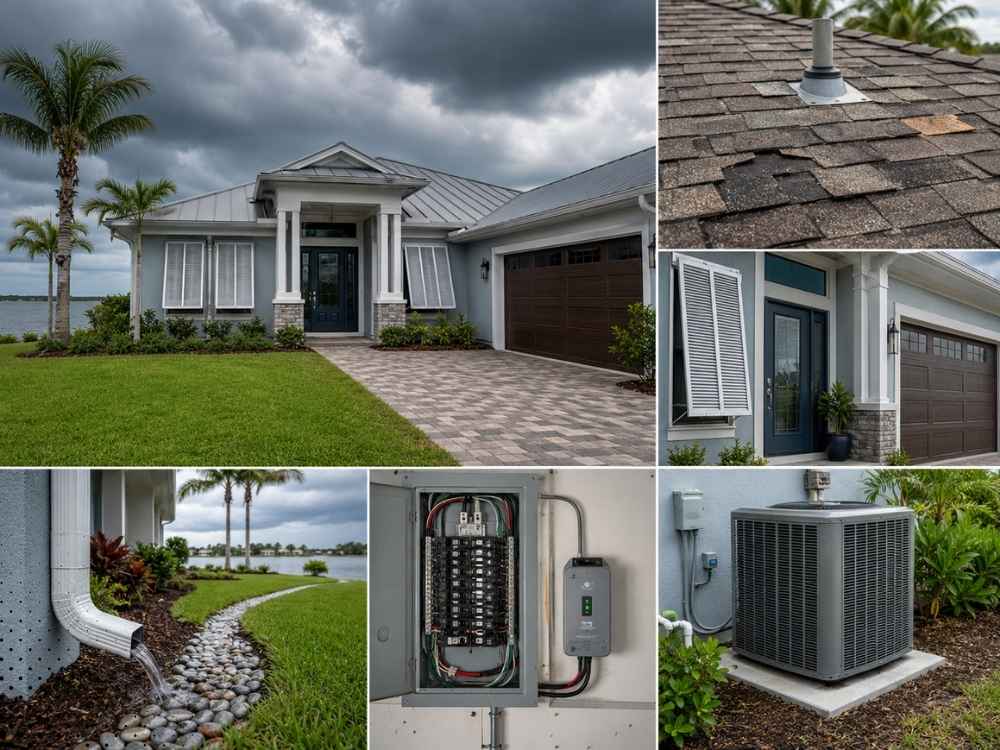 Saltwater Exposure — The Invisible Enemy
If your home is within five miles of the Atlantic or the Indian River, salt air is getting into more of your home than you realize. Window screen frames. Exterior door hardware. HVAC condenser coils. Metal fasteners on decking and fencing. Garage door springs.
September is the right time to rinse all exterior metal surfaces with fresh water. It takes 20 minutes with a garden hose and it genuinely extends the life of components that cost hundreds to replace. Pay special attention to your condenser unit — a salt-corroded coil runs inefficiently, drives up your electric bill, and shortens equipment life.
Flood Zone Awareness — Know Before The Next Storm
Brevard County has significant areas designated in FEMA flood zones, and many homeowners are not fully aware of their property’s designation or what it means practically. If you have not reviewed your FEMA Flood Map in the last two years, September — before the height of the late-season storm surge risk — is the right time to do it.
This is especially relevant if your home sits near Crane Creek, the Eau Gallie River, or any of the Indian River Lagoon tributaries. Storm surge does not follow rain predictions. It follows wind direction and surge charts.
If your home is in a Zone A or AE designation, make sure your flood insurance is current and that your documentation of contents is up to date.
Moisture Management — The Year-Round Brevard Challenge
Coastal Florida homes deal with moisture intrusion in ways that surprise homeowners who relocated from drier climates. The combination of high outdoor humidity, air conditioning condensation, and seasonal rain events creates ongoing pressure on exterior caulk, window glazing, and door thresholds.
Walk your home’s exterior and press the caulk lines around every window and door frame. Caulk that has hardened, cracked, or separated is no longer doing its job — and an unsealed gap is an open invitation to both water intrusion and pest entry.
Check interior window sills for any staining or soft drywall. That discoloration is not cosmetic — it is evidence of a moisture path that is already active.
Take the next step. Ready to schedule your inspection? Call (321) 368-9921 or visit https://www.brevardhomeinspector.com/ today!